

PULSE Lab Awarded a NOAA GOMO Pilot for Multi-Agent AI Ocean Data Analysis
NOAA's Global Ocean Monitoring and Observing Program selected the lab for one of eight FY26 AI and Data Management pilots: a multi-agent AI system that answers plain-language questions about ocean observations with traceable, reproducible results.
Published October 7, 2026 · Updated October 7, 2026
We are pleased to share that the NOAA Global Ocean Monitoring and Observing (GOMO) Program has selected the PULSE Lab for one of the eight pilot projects in its FY26 Innovation Program on Artificial Intelligence and Data Management, announced on 30 September 2026.

Our project
A Multi-Agent System for Ocean Data Analysis and Knowledge Generation
- PI: Olmo Zavala-Romero (Department of Scientific Computing)
- Co-Investigators: Gordon Erlebacher (Department of Scientific Computing) and Keshav Raja (Center for Ocean-Atmospheric Prediction Studies)
GOMO funded eight pilots this year, with a combined expected investment of about $1.5 million that includes partner funding from the U.S. Integrated Ocean Observing System (IOOS) Program and the Uncrewed Systems (UxS) Operations Center.
What we will build
NOAA and its partners collect large amounts of ocean data from floats, ships, stations and satellites. Turning those data into maps, charts and summaries usually requires specialised programming. This project will build an AI system that takes a plain-language question about ocean data and returns an answer together with the evidence behind it.
The system coordinates specialised agents. An orchestrator interprets the question and plans the analysis. A data-access agent finds and retrieves the relevant data through ERDDAP, a widely used service for finding and downloading scientific datasets. An analysis agent computes statistics, trends and diagnostics, and a visualization agent produces maps, time series and profiles. Every answer records where the data came from, which dates and locations were used, which quality checks were applied, and what limitations apply, so that results can be reviewed and reproduced.
The first demonstrations will use Argo float observations distributed through NOAA's Observing System Monitoring Center and regional observations from GCOOS, the coastal ocean observing system for the Gulf. They will address questions about ocean temperature, salinity, sampling coverage, recent conditions in the Gulf, and gaps in the data. Alongside the system, the team will develop reusable Argo and Gulf workflows, benchmark tests, documentation, and guidance for transitioning the tools to NOAA use.
Why it matters
The aim is to make ocean observations easier to use, easier to review, and faster to turn into products that support NOAA science, data management, visualization, education and decision-making.
The full announcement, including the other seven pilots, is on the GOMO website.
More from the blog
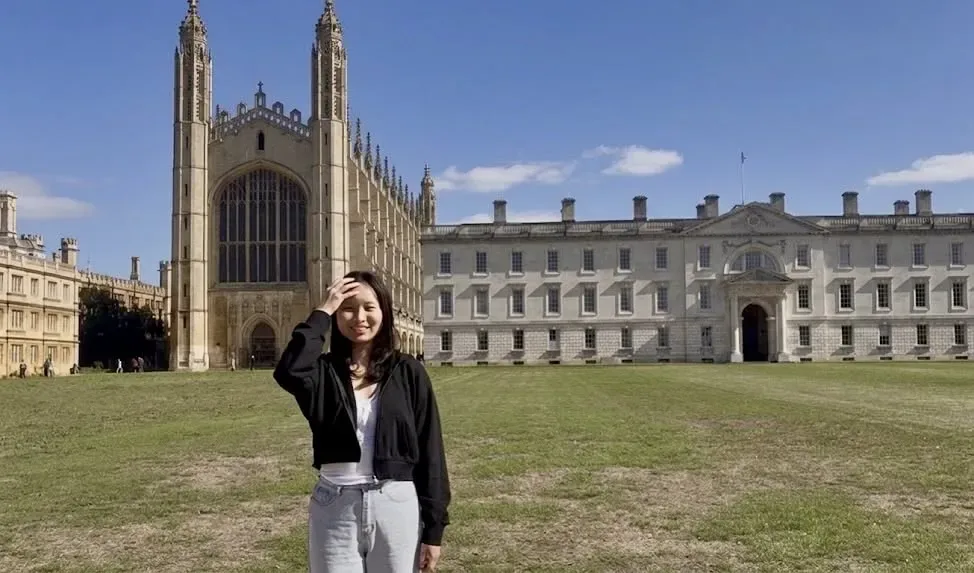
Yifan Wang Attends COGNESTIC 2026 in Cambridge and MICCAI 2026 in Strasbourg
Doctoral student Yifan Wang has returned from two events in Europe: the COGNESTIC 2026 neuroimaging summer school at the University of Cambridge and the MICCAI 2026 conference on medical image computing in Strasbourg, France.
- Health
- SciML
 Olmo Zavala-Romero
Join the FSU SC Artificial Intelligence Seminar on Discord
The FSU SC Artificial Intelligence Seminar now has a Discord server. The seminar meets Fridays at noon in DSL/SC-499 and on Zoom, with talks spanning scientific machine learning, diffusion models, AI ethics, and human creativity.
- LLM
- SciML
- Tech
Olmo Zavala-Romero 
PULSE Lab Selected for ReliaQuest Innovation Challenge Fund: Federated Agentic Access for Cybersecurity Knowledge Graphs
The lab received a ReliaQuest Innovation Challenge Fund seed award to prototype federated agentic access across cybersecurity knowledge graphs, letting an agent query sources with different schemas and query languages as one.
- Deep Learning
- LLM
- SciML
Olmo Zavala-Romero, Brendon DGR