

PULSE Lab Selected for ReliaQuest Innovation Challenge Fund: Federated Agentic Access for Cybersecurity Knowledge Graphs
The lab received a ReliaQuest Innovation Challenge Fund seed award to prototype federated agentic access across cybersecurity knowledge graphs, letting an agent query sources with different schemas and query languages as one.
By Olmo Zavala-Romero , Brendon DGR
Published June 5, 2026 · Updated July 22, 2026
We are excited to share that the PULSE Lab was selected for the ReliaQuest Innovation Challenge Fund at Florida State University!

Our project
Federated Agentic Access for Cybersecurity Knowledge Graph Integration
- Challenge area: Challenge Three – Knowledge Graph Integration
- PI: Dr. Olmo Zavala-Romero (Scientific Computing)
- Project personnel: Brendon DGR, graduate research assistant / technical lead
- Amount requested: $29,298
- Project period: June 8, 2026 – October 23, 2026
- Pitch event: ReliaQuest Innovation Challenge, October 19, 2026 (FSU Discovery Days)
This seed award is one of up to six ReliaQuest Innovation Challenge Fund projects supporting proof-of-concept work in AI and cybersecurity.
What we are building
Cybersecurity teams increasingly rely on knowledge graphs for adversary techniques, attack patterns, mitigations, and threat intelligence — but those sources often live in different systems with different schemas and query languages.
Our project will implement a federated agentic graph-database access prototype grounded in two public cybersecurity knowledge graphs:
- MITRE ATT&CK Enterprise STIX in Neo4j / Cypher
- MITRE CAPEC ATT&CK-related attack patterns in a Gremlin Server environment approximating Amazon Neptune-style traversal
An orchestrator agent will route parts of an analyst’s natural-language question to source-specific query agents. Those agents generate validated graph queries, convert results into grounded text, and pass evidence to a synthesis agent — with no vector index or embedding store built from the graph databases. The focus is native, read-only access through Cypher and Gremlin, with provenance retained behind every claim.
Example: for a question like “Which CAPEC patterns related to credential theft map to ATT&CK techniques, and what mitigations appear for those techniques?”, the planner emits CAPEC and ATT&CK tasks, specialists run bounded Cypher/Gremlin queries, and synthesis joins on ATT&CK IDs to return a provenance-linked answer, table, and compact CAPEC–ATT&CK–mitigation view.
Deliverables by October 2026
By the ReliaQuest pitch, the team aims to deliver a working demonstration that:
- Queries ATT&CK and CAPEC as distinct graph-database sources
- Correlates attack patterns with ATT&CK techniques and mitigations
- Evaluates routing, query translation, answer grounding, and provenance correctness
- Documents guidelines for migrating the same agent framework to other query languages
A later stage could extend the same agent layer to managed graph backends such as Amazon Neptune and Google Cloud Spanner/Spanner Graph (openCypher, Gremlin, GQL).
About the ReliaQuest–FSU partnership
This work is part of ReliaQuest’s broader AI and cybersecurity partnership with FSU, backed by a $1.5 million philanthropic investment that established the annual ReliaQuest Innovation Challenge. Seed awardees develop prototypes over the summer and early fall, then pitch for follow-on prizes totaling up to $200,000.
Read more: ReliaQuest and Florida State University Launch AI and Cybersecurity Partnership.
Program details: FSU Office of Research – ReliaQuest Innovation Challenge Fund.
More from the blog
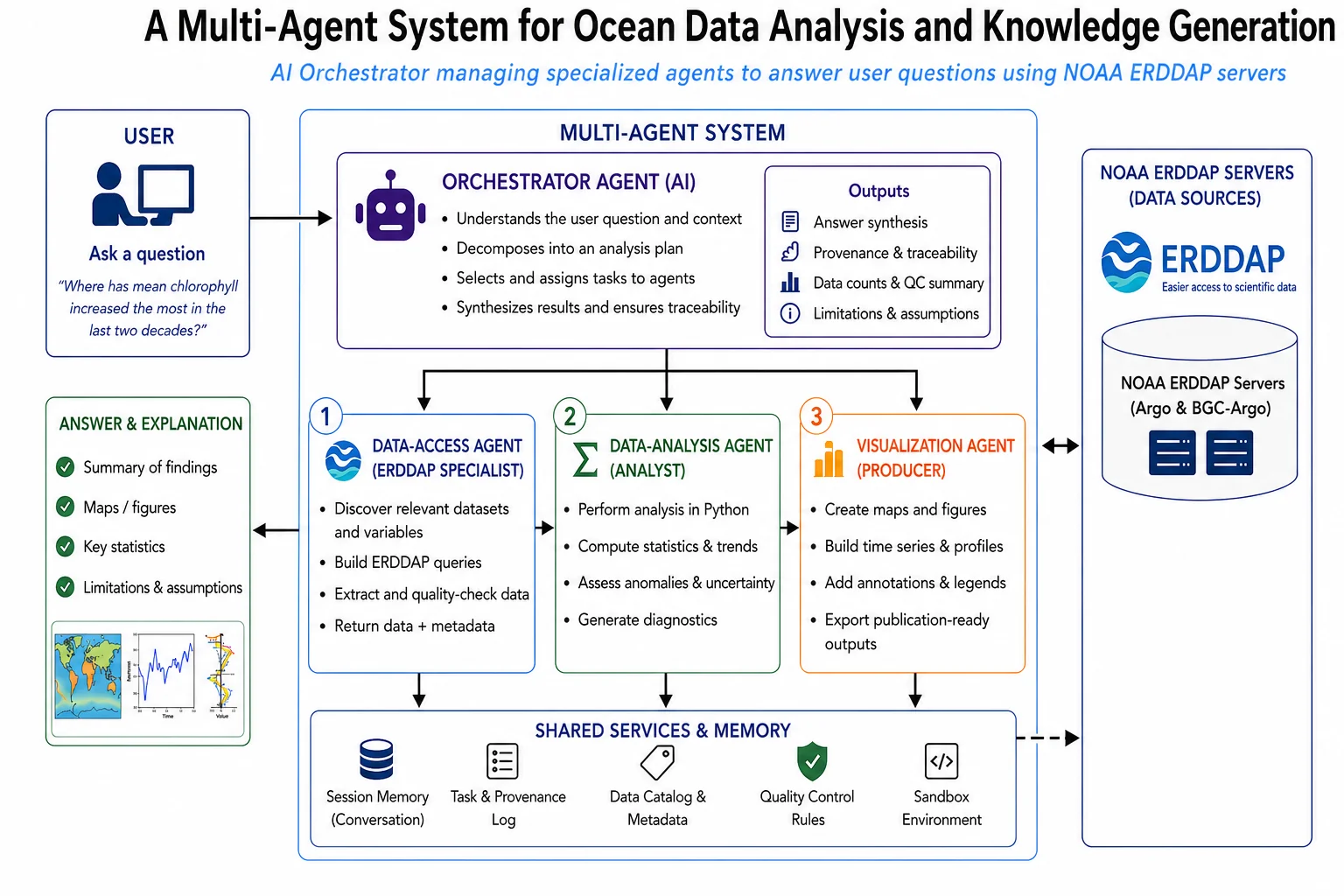
PULSE Lab Awarded a NOAA GOMO Pilot for Multi-Agent AI Ocean Data Analysis
NOAA's Global Ocean Monitoring and Observing Program selected the lab for one of eight FY26 AI and Data Management pilots: a multi-agent AI system that answers plain-language questions about ocean observations with traceable, reproducible results.
- LLM
- Ocean
- SciML
 Olmo Zavala-Romero
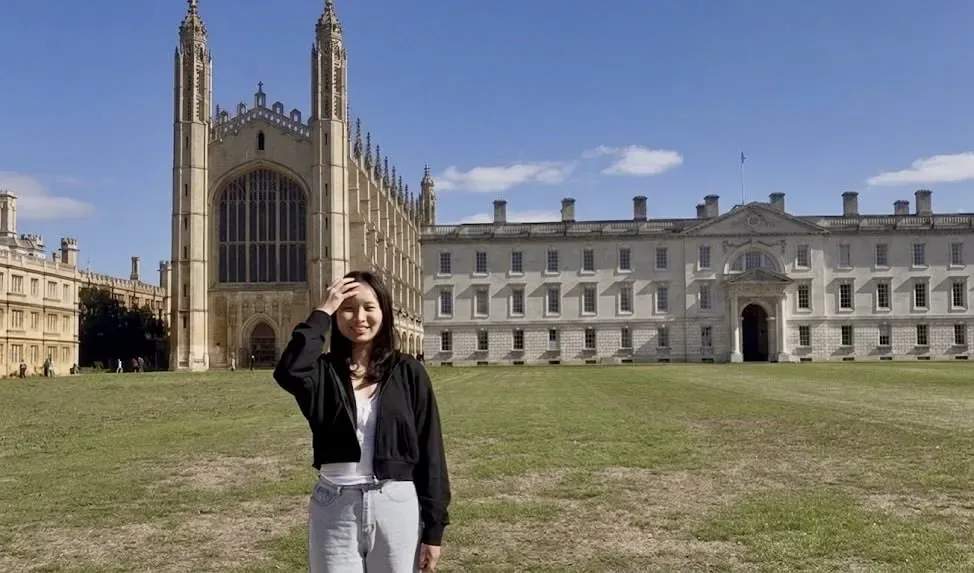
Yifan Wang Attends COGNESTIC 2026 in Cambridge and MICCAI 2026 in Strasbourg
Doctoral student Yifan Wang has returned from two events in Europe: the COGNESTIC 2026 neuroimaging summer school at the University of Cambridge and the MICCAI 2026 conference on medical image computing in Strasbourg, France.
- Health
- SciML
Olmo Zavala-Romero 
Join the FSU SC Artificial Intelligence Seminar on Discord
The FSU SC Artificial Intelligence Seminar now has a Discord server. The seminar meets Fridays at noon in DSL/SC-499 and on Zoom, with talks spanning scientific machine learning, diffusion models, AI ethics, and human creativity.
- LLM
- SciML
- Tech
Olmo Zavala-Romero