

PULSE Lab's Ariadne Awarded $50,000 at the ReliaQuest Innovation Challenge
At FSU Discovery Days, ReliaQuest awarded the lab $50,000 to take Ariadne, an agent that answers security analysts' questions across separate threat-intelligence graph databases, into its next phase.
By Olmo Zavala-Romero , Brendon DGR
Published October 24, 2026
We are thrilled to share that ReliaQuest has awarded the PULSE Lab $50,000 to take Ariadne into its next phase. Olmo Zavala-Romero received the award on Monday, October 19, at "The Quest for What's Next!", the ReliaQuest Innovation Challenge pitch competition held during FSU Discovery Days at the Brian and Renee Murphy Forum in the Herbert Wertheim College of Business. Florida State University News covered the event, and FSU produced the video above.
From seed project to next phase
Ariadne began in June as the lab's ReliaQuest Innovation Challenge Fund seed project on federated agentic access to cybersecurity knowledge graphs. Over the summer and early fall, Brendon DGR, the project's graduate research assistant and technical lead, built and evaluated the prototype under Dr. Zavala-Romero's supervision.
On Monday, six teams presented their work to a panel of judges, competing for ReliaQuest funding for projects in AI and cybersecurity. The $50,000 award will fund the next phase of Ariadne.

What Ariadne does
Threat-intelligence knowledge (the techniques adversaries use, the attack patterns those techniques compose into, and what mitigates them) does not live in one place. It sits in separate graph databases with different schemas and query languages. Ariadne answers a security analyst's question across two of them, MITRE ATT&CK in Neo4j (queried in Cypher) and MITRE CAPEC in a Gremlin server, and cites the exact graph record behind every claim.

Instead of merging the two graphs into one store, Ariadne queries both live and correlates them only on identifiers that both sources' schemas declare as a bridge, so it cannot invent a join the data does not support. Every design choice was settled by a controlled comparison rather than assumed:
- Federate, don't merge. A merged copy of both graphs bought no accuracy over federating the two live, and merging means rewriting identifiers the source databases publish.
- Deterministic by default. Every stage of the agent graph has a deterministic path and its own switch, so experiments can isolate exactly where a language model helps and where it only adds latency. Letting a model write Cypher or Gremlin directly lost head-to-head to the schema-gated approach.
- Schema-derived queries. Queries are composed from each database's live schema rather than hand-written templates. That approach overtook the templates on held-out questions, and the result reproduced on a second, independent question set.
- No vector index. Exact identifiers and technique-to-mitigation mappings are not left to approximate embedding search.
- Every claim verified. Each claim passes the same four-part check before it is shown, and an empty result becomes a stated refusal that carries the exact query that was run.
- Read-only by construction. Layered safeguards (schema limits, a planner gate, a per-language read-only query validator, traversal and row caps, execution-time limits, and a check on the returned evidence) can each refuse a query, and none can widen what an earlier layer disallowed.
Analysts work with Ariadne through a web workbench that shows each pipeline stage as it runs, next to the evidence behind the answer. The open problem the team has named for the work ahead is closing the accuracy gap that appears when the planner breaks down an open-ended question on its own instead of following an authored plan.
Brendon has written up the project in detail, with more screenshots and diagrams, on his website.
Congratulations to all the presenters
Congratulations to Assistant Professor Xian Mallory of the Department of Computer Science, who won the $100,000 grand prize for the startup Sage, and to Professor Xin Zhang of the Department of Statistics, who was also recognized for the presentation "Protecting the Rare Label: Error-Controlled Classification for Data Sensitivity."
About the ReliaQuest–FSU partnership
The competition grew out of the AI and cybersecurity partnership that ReliaQuest and FSU launched in spring 2026. ReliaQuest's $1.5 million philanthropic investment established the annual ReliaQuest Innovation Challenge at FSU. We are grateful to ReliaQuest and to the FSU Office of Research for their support.
Read more: Florida State University computer scientist wins $100,000 grand prize at Discovery Days event (FSU News) and ReliaQuest and Florida State University Launch AI and Cybersecurity Partnership.
More from the blog
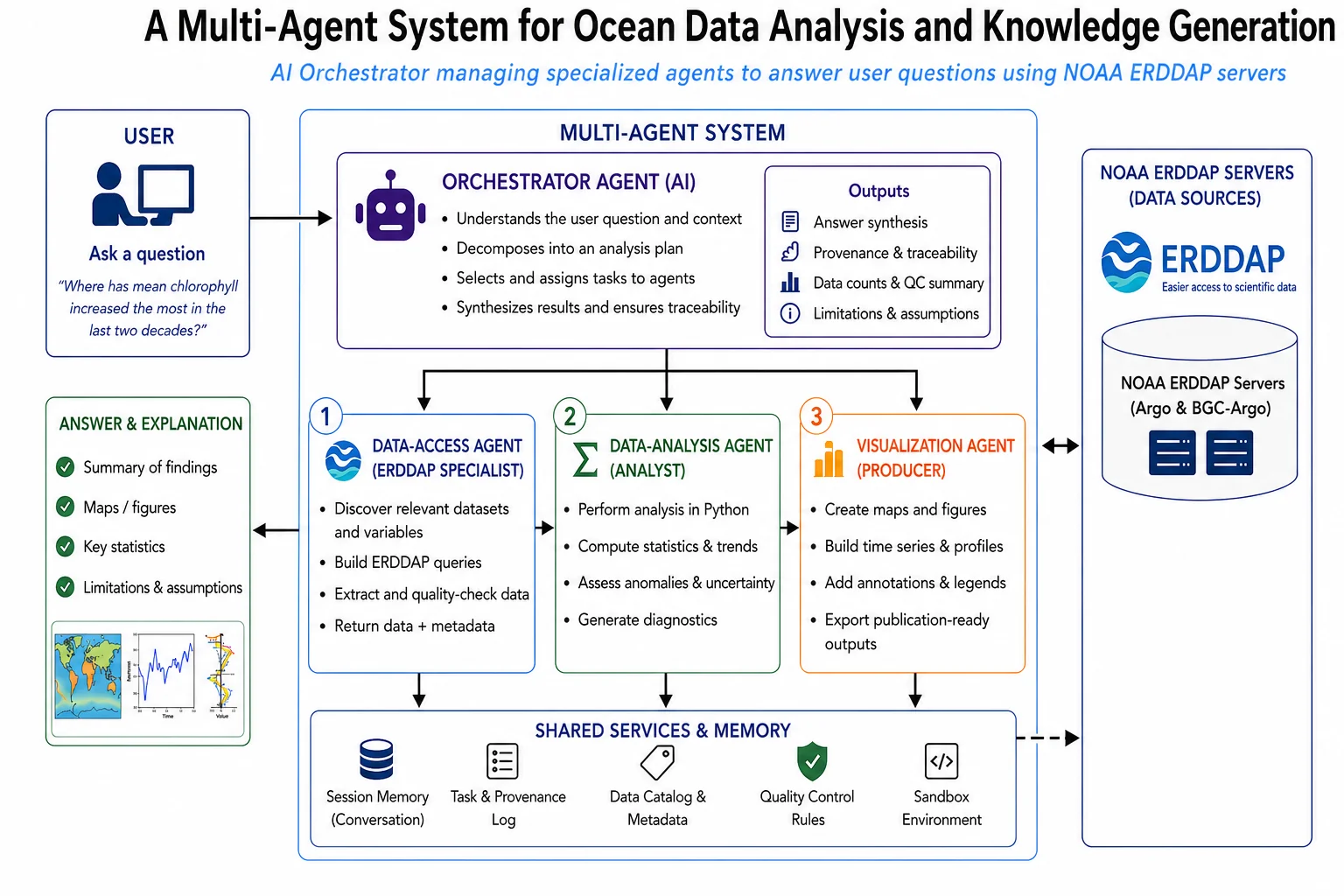
PULSE Lab Awarded a NOAA GOMO Pilot for Multi-Agent AI Ocean Data Analysis
NOAA's Global Ocean Monitoring and Observing Program selected the lab for one of eight FY26 AI and Data Management pilots: a multi-agent AI system that answers plain-language questions about ocean observations with traceable, reproducible results.
- LLM
- Ocean
- SciML
 Olmo Zavala-Romero
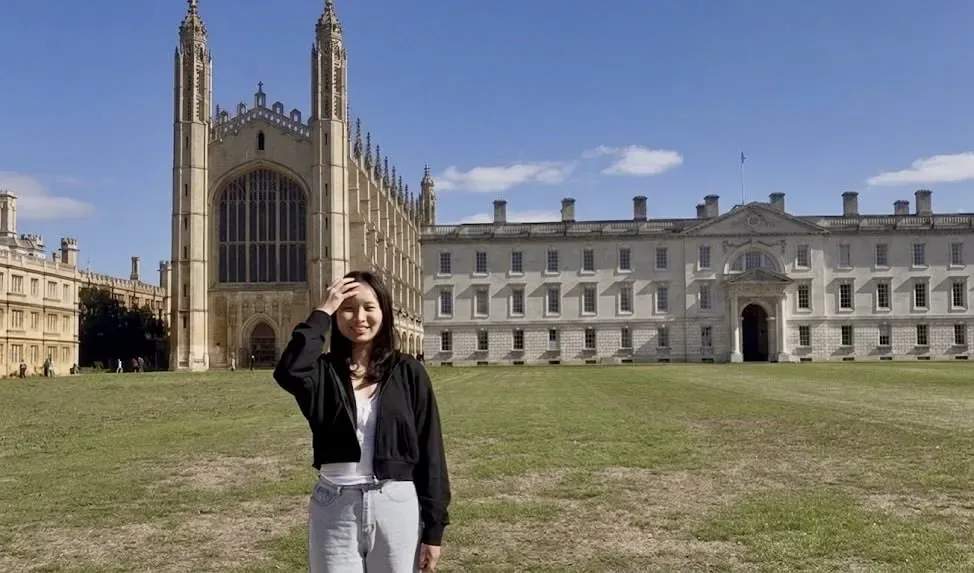
Yifan Wang Attends COGNESTIC 2026 in Cambridge and MICCAI 2026 in Strasbourg
Doctoral student Yifan Wang has returned from two events in Europe: the COGNESTIC 2026 neuroimaging summer school at the University of Cambridge and the MICCAI 2026 conference on medical image computing in Strasbourg, France.
- Health
- SciML
Olmo Zavala-Romero 
Join the FSU SC Artificial Intelligence Seminar on Discord
The FSU SC Artificial Intelligence Seminar now has a Discord server. The seminar meets Fridays at noon in DSL/SC-499 and on Zoom, with talks spanning scientific machine learning, diffusion models, AI ethics, and human creativity.
- LLM
- SciML
- Tech
Olmo Zavala-Romero